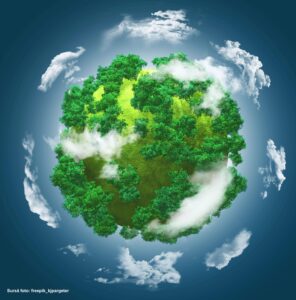
Earth, our one of a kind home

“Look again at that dot. That’s here. That’s home. That’s us. … A lonely speck in the great enveloping cosmic dark. It is the responsibility of humans … to preserve and cherish the pale blue dot, the only home we’ve ever known.” (Carl Sagan, pale blue dot, 1994)
The earth abounds in such an amazing diversity of life forms to which it captivates us without question and charms us to the point of tears. The harmony of music shows started suddenly in a cluster of trees is often sublime. And at times the truly enchanting fragrance of flowers, and the incredible display of color of the surroundings completes the fading and ever-changing masterpieces of our unique home. A home worthy of perpetual admiration with a landscape that invites both permanence and exploration and repels boredom or sadness of any downtrodden soul drained of vigor.
When the Voyager space probe, located at about 6 billion kilometers from Earth, sent to those left behind the image of the pale blue dot, barely spotted on the background of the cosmic immensity, it fixed in the collective mind the immeasurable value of the only home we’ve ever known, as was later described by the astronomer Carl Sagan.
This tiny cosmic jewel can make our stay so pleasant that only a heart insensitive to beauty may treat it as just a simple source of material gains or a poor stage for pursuing some petty or selfish interests.
Under the empire of degradation
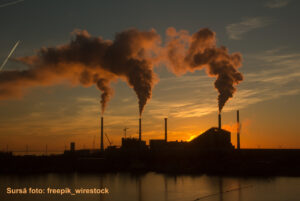
“We are on a fast track to climate disaster. Major cities under water. Unprecedented heatwaves. Terrifying storms. Widespread water shortages. The extinction of a million species of plants and animals. This is not fiction or exaggeration. It is what science tells us will result from our current energy policies.” —Speech by António Guterres, secretary-general of the United Nations, concerning the Intergovernmental Panel on Climate Change report issued on April 4, 2022.
The decisions that produce harmful effects taken globally for decades, the speed of collective imprudence and ignoring of warning signs of Earth’s ecosystems give the impression of an out-of-control freight train heading with terminal velocity towards a cliff veiled in shadows. Rolling towards the tragic outcome foreseen by experts has a huge social inertia, that maintains the dynamics of degradation.
The spectator watching stunned at this suicidal course justly asks the question: What exactly poses more danger to our existence as a dominant specie on Earth? Aggressive exploitation of resources, pollution generated by irresponsible dumping of waste or moral degradation of the majority of ungrateful and selfish “tenants” of the planet, that abuse of her generous pantries and the patience of her rightful owner?
Perennial beauty of simple acts

What can be more touching than watching an old lady hunched over a few rows of flowers carefully tended to on a small piece of land in front of a building with the facade as aged as her hair? The care when she weeds and waters them, the pure joy in her eyes and the attention as she guards them from neighborhood strays are like a glass of cold spring water on a hot torrid day. You feel that our inclination towards good and beauty hasn’t paled completely when facing selfishness. And you sort of notice the timid threads of hope that all the ugliness of humanity will be replaced eventually by the powerful and indestructible strength of good and eternal beauty.
And yet, …
The crossings with opposite flows of opinions and interests of specialists, corporations and various organizations, governments and alliances of political, economic or military nature, stir up ambushes in which true values are lost. And yet, … the oldest modern book of mankind contains a statement made over 3000 years ago regarding the future of our planetary home, from the point of view of the rightful owner: “He has established the earth on its foundations; It will not be moved from its place forever and ever.” —Psalm 104, verse 5
The insanity of vanity
“It has been said that astronomy is a humbling and character-building experience. There is perhaps no better demonstration of the folly of human conceits than this distant image of our tiny world.”—Carl Sagan, Pale blue dot, 1994
Modern man in his vanity, behaves as if it’s his right to limitlessly exploit the vast resources of Earth, to the detriment of other “unintelligent” life forms. In his chase for profit, power and pleasure, man ignores the fact that in reality every kind of life has a “reason to be” and their existence, diversity and abundance is useful even to those gifted with reasoning.
The nostalgia for paradise
“The nostalgia for paradise is among the powerful nostalgias that seem to haunt human beings. It may be the most powerful and persistent of all. A certain longing for paradise is evidenced at every level of religious life.” —Encyclopedia.com, Philosophy and Religion > Other Religious Beliefs and General Terms > Religion: General > Paradise
Regarding this subject, the foundational book of Christianity claims that “The heat-parched ground will become a reedy pool, And the thirsty ground springs of water. In the lairs where jackals rested, There will be green grass and reeds and papyrus.”(Isaiah, chapter 35, verse 7) that mankind will overcome the current stage of selfishness, greed, indifference and ignorance. And paradise on earth will become an eternal reality such that mankind will no longer be needed to yearly celebrate a day for Earth to sensitize the conscience of the global community regarding the need for preserving all life forms. Through the Bible, the Creator and Owner of the “pale blue dot” of the cosmos guarantees that the future of our planet is secure.